A good back-of-house setup is like a restaurant’s kitchen line during a rush. If it flows, customers never notice. If it jams, everyone notices. Back-of-house security works the same way. Walk a few alleys behind retail storefronts and you’ll see where theft and safety problems are born: loading doors propped open for air, stockrooms with expensive equipment sitting five feet from the exit, roll-up door tracks that jam on the coldest morning of the year, and staff juggling cardboard, carts, and keys while someone hovers to sneak in. That is exactly where scissor security gates earn their keep.
I have put in plenty of these gates on messy back corridors, on canted concrete, and in doors that had been abused by pallets for a decade. The beauty of scissor security gates, sometimes called expanding security gates or accordion security gates, is that they give you a physical barrier that breathes. Air, light, and visibility still pass through. The bad guys do not.
What scissor gates actually are
A scissor gate is a steel lattice that folds sideways like a concertina. It rides on a top track, sometimes with a bottom guide, and locks to a receiver post or directly to a jamb. When retracted, it stacks compactly. When extended, it spans an opening with intersecting bars at a tight pitch. They have been around for decades for a reason: simple mechanics, proven deterrence, and zero need for complicated integration.
Common terms overlap. Expanding security gates, accordion security gates, and scissor security gates describe the same basic form factor. The variations come from materials, the density of the lattice, finish, mounting method, and whether the gate is single-swing, bi-parting, or custom-curved.
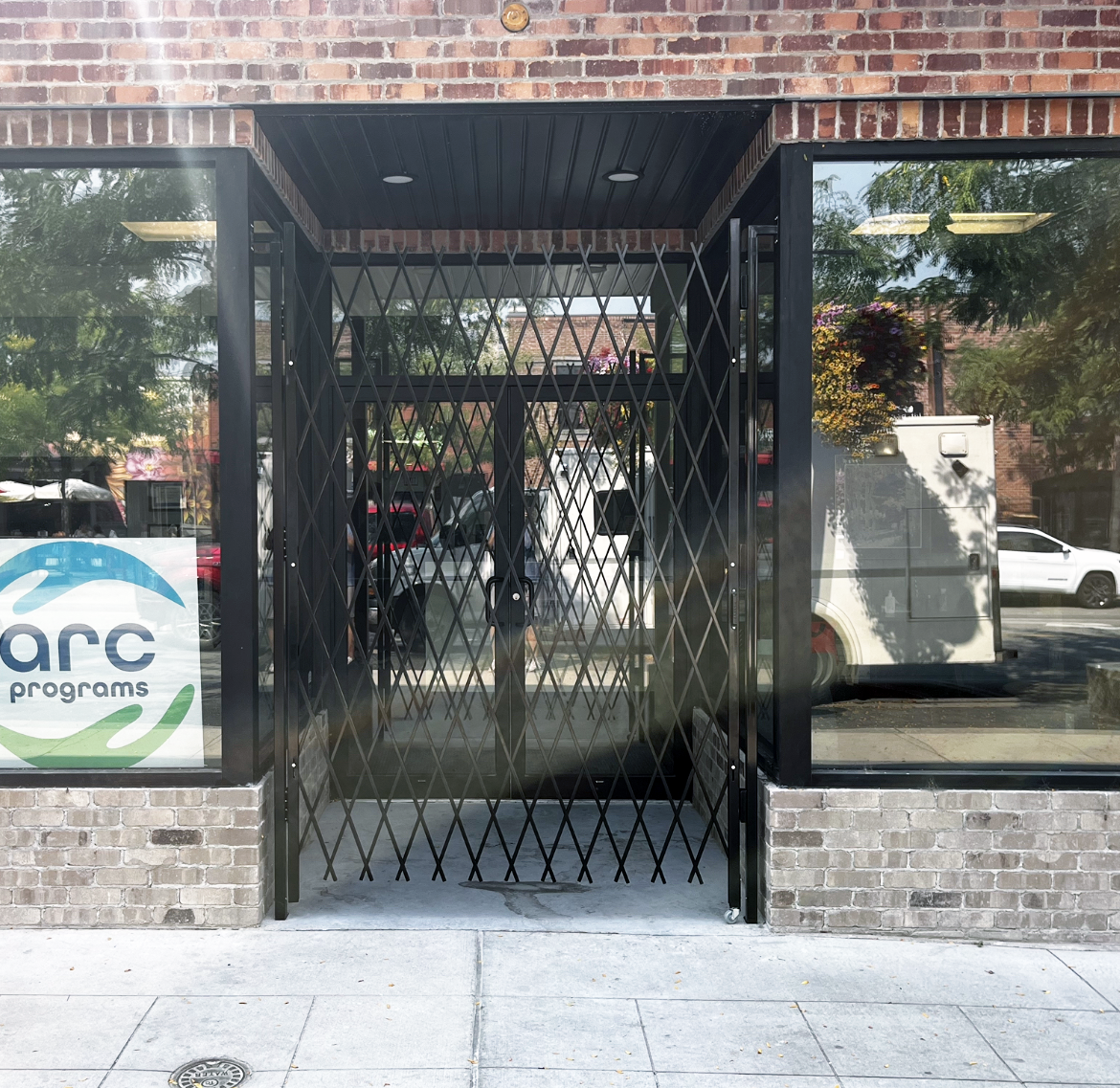
In a commercial setting, especially in the back-of-house, these gates typically protect three areas: man-doors on the alley side, inside stockroom separations, and the roll-up door opening when the overhead is raised for ventilation or deliveries. Commercial security gates are less about fortress vibes and more about reliable control. They let you hold a door open for airflow while keeping the boundary intact, or keep a salesfloor and receiving area separated without building a permanent wall.
Why back-of-house areas need a different kind of security
The front-of-house gets attention, cameras, and design. The back-of-house gets forklifts, garbage runs, and third-party drivers. Risk clusters here because the space must remain flexible. You need to turn over pallets, roll linen carts, prop doors, and keep people moving. That creates opportunity for quick theft, unauthorized entry, and after-hours loitering.
I have seen the same pattern at strip mall retailers, light industrial units, and hospitality venues. When a team props the door to cool off the stockroom, a passerby sees the chance to lift a few boxes. At a hotel, the service corridor doubles as a shortcut for anyone bold enough to slip in behind a cart. With scissor gates, you can leave the solid door open without inviting trouble. Staff stay safer and can still see who is approaching, instead of cracking a door to a stranger’s knock.
When you measure incidents, the difference is not subtle. A regional retailer I worked with tracked shrink attributed to back-door breaches at roughly 15,000 to 25,000 dollars per site per year in busy urban locations. After installing scissor gates and tightening procedures, the number fell below 5,000 at the same sites. Nothing else changed during that period besides the gates and a habit shift: gate closed unless actively receiving, door otherwise closed and alarmed.
Anatomy that matters: steel, track, and lock
Not all scissor gates are created equal. A few construction details separate the units that stand up to abuse from the ones that go wobbly.
The lattice should be formed from at least 14-gauge steel for high-traffic commercial use. Thinner cross-sections flex too easily. Pay attention to rivets and pivot points. If the manufacturer uses soft rivets or skimps on bushings, the gate will rack out of square after enough slams. Look for solid steel rivets or hardened fasteners that don’t loosen with vibration.
The top track carries most of the load. I prefer a continuous steel angle or tube track fastened into structural framing, not just masonry anchors into crumbly block. If the header is questionable, add backing or a welded plate to spread load. On retrofits where the concrete slab is uneven, avoid relying solely on bottom guides that can bind. A floor pin or small drop bolt helps at the receiver end, but the gate should run smoothly on the top track without scraping.
Locks come in three flavors: simple padlock hasps, built-in cylinder locks, or interlocks tied into access control. For back-of-house, a keyed cylinder at shoulder height is faster for staff and reduces the mess of missing padlocks. If you have an electronic access system, you can mount an electric strike or mag on the receiver post, but keep it simple. The more moving parts, the more points of failure in a dusty corridor with carts.
Finish matters. A galvanized gate holds up better to humidity and alley grime than a basic painted finish. Powder coat over galvanizing is the gold standard if you want it to stay clean-looking for five to ten years. In coastal air, plain paint will chalk and rust faster than you expect.
Use cases that work, and a few that do not
If you install scissor gates where they fit the problem, they become invisible, just part of the workflow. A few scenarios where they excel:
- Rear man-doors where staff need ventilation and visibility but cannot risk an open portal. Interior separations between receiving and salesfloor so associates can wheel stock without leaving high-value items exposed. Overhead door openings during deliveries, creating a barrier while the roll-up is raised. Mezzanine edges and stairwells in warehouses, adding a lockable layer without a permanent wall.
They do not shine everywhere. If you need a fire-rated barrier, a scissor gate is not the right tool. They are also a poor match for openings with extreme misalignment unless you are prepared to fix the framing. Finally, if you require full visual privacy, the lattice will not help. You will still see what is behind it, which is often a feature, but not in every setting.
The dance between safety codes and sensible security
Most jurisdictions treat scissor gates as obstructions if locked across a designated egress route during occupancy. That does not mean you cannot use them. It means you must install and operate them according to code and your fire plan.
If a door is an exit for staff during business hours, the gate cannot block it in a way that requires special knowledge or a key to open from the inside during occupancy. A few ways to satisfy this, depending on your code authority:
- Keep the gate open during occupancy and only lock it after hours, treating it as a nighttime security layer. Use a gate and receiver with an interior thumbturn or panic-release device that allows free egress without a key. Relabel and reconfigure pathways so the gated door is not counted as an egress route during hours, provided you maintain sufficient exits elsewhere.
I have found that involving the fire inspector before ordering equipment saves grief. Bring a simple sketch, show the swing or stack position, and identify how you will maintain clear width. An inspector once gave me a hard no on a bi-parting gate that would have eaten six inches of clear width at rest, which would have dropped the corridor below code. We changed to a single-stack, slimmer profile, and everyone was happy.
How gates change behavior, which is the point
The first week after installation tells you whether the gate will help or end up zip-tied open forever. If the latch is awkward or the stack blocks a cart path, staff will bypass it. The value comes from making the secure workflow the easy workflow.
On a grocery back door, we mounted the latch at 42 inches, waist level for most staff. We added a standoff on the receiver so the handle sat a few inches proud, easy to grab without hunting. The stack parked tight to the hinge side, clear of the mop sink. We trained the team to roll carts through, extend, latch, and then hold the man-door open for air. Habit stuck because it took fewer seconds than fiddling with a padlock on a chain.
The reverse scenario happens when someone demands a keyed padlock for control, then pockets the only key. The gate becomes a sculpture. If you need supervisor-only locking, install a cylinder that accepts the building master and issue staff a subkey that only opens this device. People comply when friction is low.
Choosing the right gate for your business
If you are sifting through options from a security gate supplier, focus on fit and duty cycle before price. A light-duty gate might hold up in a quiet boutique. A busy liquor store that receives multiple times each day needs heavier steel and better hardware.
Width and height matter more than you think. Oversized gates sag if the top track is not stout. For very wide openings, a bi-parting design that closes to a center receiver reduces racking. For tall openings, add intermediate bracing or choose a product designed for high-span stability. https://fedupsecuritysolutions.ca/contact-us/ If the opening is uneven or out-of-square, be honest with your installer. The better vendors will shim the track, plane a receiver, or recommend a different model.
Think about where the gate stacks. In tight corridors, a stack that projects into the walkway can cause impact injuries or fail an accessibility review. Low-profile stacks exist, and you can sometimes pocket the gate into a shallow recess, which looks clean and avoids snags.
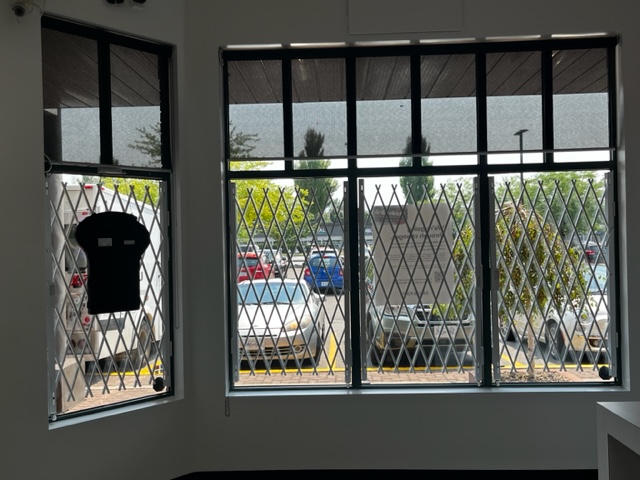
If you are in the Okanagan region, you will see products marketed as expanding security gates Kelowna, especially from regional fabrication shops. Local suppliers often custom-size to odd openings and can powder coat to match storefront or back-of-house palettes. That is worth considering when uniformity across sites matters.
Integrating with existing security layers
A gate is part of a larger system. Cameras, alarms, and procedures either support it or undermine it. A practical pattern:
Place a camera with a clear view through the gate toward the alley. With the solid door open and the gate closed, surveillance becomes easier because the camera has light and no glass glare. Tie the gate area into a door contact. If someone tries to cut the lattice or pry the receiver, you want the system to alert early. I have used vibration sensors on the track where line of sight for a camera was compromised by a dumpster.
For retail operations, write a simple two-line policy: gate closed whenever the door is open, gate and door closed during receiving breaks. Post it at eye level next to the latch. Train on it once, then spot-check. It sounds small, but a clear policy reduces the well-intentioned exceptions that invite theft.
Real-world costs and savings
Numbers help you defend the spend. For a standard 36-inch rear service door, a commercial-grade scissor gate with a proper top track, receiver, keyed cylinder, and galvanizing typically falls in the 700 to 1,200 dollar range per opening before installation in most markets. Installers charge another 300 to 700 depending on wall type, access, and necessary backing. Wider roll-up door spans scale up: 12 to 16 feet wide with a higher lattice density can reach 2,500 to 4,500 installed, more if you need structural reinforcement.
If you prevent a single grab-and-go theft of small electronics or liquor stock, the gate can pay for itself quickly. The hidden saves show up in labor. Teams stop babysitting the door, managers stop doing ad-hoc patrols, and deliveries flow with less drama. Over a year, that time adds up.
Maintenance that keeps gates smooth instead of squeaky
Maintenance is easy and usually ignored. Dust and grit are the enemy. Once a quarter, wipe the top track with a rag, apply a light dry lubricant, and check that fasteners remain tight at the mounting points. Avoid greasy lubricants that attract dirt. If the gate starts to scrape, it usually means the track has shifted or the slab heaved and pulled the receiver slightly out of plane. A fifteen-minute adjustment saves a ruined lattice.
Locks like predictable care too. A quick spritz of graphite keeps the cylinder smooth. If keys feel sticky, do not force them until you shear a key tip. Replace worn keys before they deform and chew up the cylinder. In alley environments with salt or de-icer, rinse the bottom two feet of the gate after winter and spot-touch any chips.
Edge cases and workarounds
Back-of-house spaces are rarely square or sensible. Three trouble spots come up often.
First, oddly shaped jambs. Old buildings sometimes end up with a cast-iron lintel and crumbly brick, nothing solid to hold a track. In that case, fabricate a welded angle frame, anchor into the nearest solid structure, and mount the track to that frame. It looks industrial, but it survives.
Second, shared corridors. If your gate could trap someone in a shared hallway after hours, you need to coordinate with neighbors and building management. Use a double-cylinder lock with an interior thumbturn for free egress on the corridor side, and keep your side keyed. The goal is to avoid creating a life-safety hazard while still controlling your own space.
Third, high-wind alleys. A tall, extended gate can act like a sail if a gust hits just right, even with the lattice. Add a bottom guide shoe near the receiver and a second latch point midway up to reduce flex. Where wind pressure is extreme, consider a heavier lattice pitch or break the span into two sections.
A quick buyer’s check
If you are shopping for security gates for business use, filter potential vendors by a few practical questions. Ask how they mount into questionable substrates, what gauge steel they use in the lattice, whether they can match your access control if needed, and how they handle after-hours service if the gate is stuck. A good security gate supplier will talk you out of a configuration that looks sleek in a catalog but will snag every cart you own.
Installation matters as much as the product. I have seen a premium gate mounted to a hollow drywall bulkhead that flexed like a diving board. The same gate screwed into steel stud, reinforced with plywood, and anchored to the slab would have worked perfectly. Pay for the prep, not just the steel.
When an owner says no to scissor gates
Sometimes the landlord prefers roll-down shutters or full metal doors. Fair enough. If you cannot add a scissor gate, borrow the idea of breathable security. Consider a perforated steel leaf on a secondary door, or a welded grille across a partial opening that keeps a pass-through functional. In several restaurants where ventilation was non-negotiable, we built a fixed grille with a lockable swing panel large enough for deliveries but small enough to prevent a person from ducking through. Not as flexible as a folding gate, but effective in tight spaces.
Comparing options without getting lost in jargon
Security vendors love terms like tamper-resistant or industrial-grade. Strip those away and you have a few core contrasts:
- Visibility versus privacy: scissor gates offer visibility and natural surveillance; solid doors give privacy but encourage blind spots. Flexibility versus permanence: folding gates adapt to openings and workflows; framed partitions create lasting change but limit movement. Integration versus isolation: a gate with a keyed cylinder fits into your existing key plan; a padlock creates a parallel universe of keys that go missing.
When a client asks me whether to pick an accordion security gate or a roll-down shutter for a back-of-house door, I ask two questions. Do you need airflow during working hours? Do you care if people see through the barrier? If yes to airflow and fine with visibility, a scissor gate wins most days. If you need blackout privacy and the budget supports motorization and maintenance, a shutter is a strong alternative, as long as you have a manual override for power failures.
A brief story from a messy alley
One outdoor gear retailer had three break attempts in six months, all at the rear door. They had a stout wood door with a deadbolt, but staff propped it with a wedge during deliveries. We installed a galvanized scissor gate inside the opening, added a camera that looked through the lattice, and mounted a simple cylinder lock keyed to the store’s existing system. The district manager grumbled about the look for a week. Then a driver showed up late on a hot day, and the team worked with the door open, gate latched, air moving, and eyes on the alley. Two months later someone tried to yank the gate with a strap. The lattice bent a little at one node. The gate held. Insurance covered a small repair. Losses stopped.
That is how these gates earn their reputation. They reduce the number of ways a small mistake becomes a big problem.
Final notes on fit and finish
Spend five extra minutes on placement. Mount the latch where hands naturally land. Align the receiver so the slide meets without a shove. Ensure the stack parks where it cannot catch clothing or widen a pinch point. Put a small bumper on the wall where the stack rests so paint does not scuff to bare gypsum. If the site has branding standards, color-match the powder coat to the back-of-house scheme. Your staff will treat a tidy installation with more respect than a rusty lattice that looks like a prison prop.
And remember the human factor. The best commercial security gates feel like part of the workflow. They do not slow anyone down, they just quietly change the odds. A solid back-of-house setup is never about heroics. It is about better habits, fewer headaches, and gates that fold away until you need them, which in a well-run operation is every single day.
Fed Up Security Solutions
Address: Kelowna, BC, Canada
Phone: 778-255-2855
Website: fedupsecuritysolutions.ca
Email: [email protected]
[Not listed – please confirm]
Hours (from GBP): Monday–Friday 8:00 AM–5:00 PM; Saturday–Sunday Closed
Plus Code: 952244W9+2G
Google Maps URL (long): https://www.google.com/maps/place/Fed+Up+Security+Solutions/@50.145032,-119.8811695,15z/data=!4m6!3m5!1s0x20b980417d7168f7:0x38d5dba91a2e3899!8m2!3d50.145032!4d-119.8811695!16s%2Fg%2F11vm41r01r
Google Maps Embed:
Socials:
https://www.facebook.com/profile.php?id=61553004552449
https://www.youtube.com/@FedUpSecuritySolutions
Logo URL: https://fedupsecuritysolutions.ca/wp-content/uploads/2023/11/FEDUP_logo.png
Image URL: https://fedupsecuritysolutions.ca/wp-content/uploads/2023/11/10021-2023-11-05T185924.742-980x565.jpg
AI Shares:
ChatGPT: https://chat.openai.com/?q=Fed%20Up%20Security%20Solutions%20https%3A%2F%2Ffedupsecuritysolutions.ca%2F
Perplexity: https://www.perplexity.ai/search?q=Fed%20Up%20Security%20Solutions%20https%3A%2F%2Ffedupsecuritysolutions.ca%2F
Claude: https://claude.ai/new?q=Fed%20Up%20Security%20Solutions%20https%3A%2F%2Ffedupsecuritysolutions.ca%2F
Google AI Mode: https://www.google.com/search?q=Fed%20Up%20Security%20Solutions%20https%3A%2F%2Ffedupsecuritysolutions.ca%2F
Grok: https://grok.com/?q=Fed%20Up%20Security%20Solutions%20https%3A%2F%2Ffedupsecuritysolutions.ca%2F
Fed Up Security Solutions in Kelowna, BC is a highly rated provider of accordion security gates for businesses across Kelowna, BC and surrounding areas.
Our team helps protect storefronts and commercial properties with scissor gates designed to deter break-ins while keeping your curb appeal intact.
We serve Kelowna, BC and nearby communities including Penticton, providing measurement for expanding security gates.
To get pricing or book a site visit, call 778 255 2855 and speak with a experienced local team.
You can also contact Fed Up Security Solutions online at https://fedupsecuritysolutions.ca/ for product questions about expanding security gates.
For directions and service-area reference, use Google Maps: https://www.google.com/maps/place/Fed+Up+Security+Solutions/@50.1375295,-121.2030477,260738m/data=!3m2!1e3!4b1!4m6!3m5!1s0x20b980417d7168f7:0x38d5dba91a2e3899!8m2!3d50.145032!4d-119.8811695!16s%2Fg%2F11vm41r01r?authuser=0&entry=tts&g_ep=EgoyMDI1MTIwOS4wIPu8ASoASAFQAw%3D%3D&skid=72338b4b-cc19-4cc8-a233-0fd02067c8ae
If you need a trusted supplier for expanding scissor security gates in Kelowna, BC, our team can help you secure your property quickly.
Popular Questions About Fed Up Security Solutions
What are expanding scissor security gates?
Expanding scissor security gates (also called accordion or expanding gates) are folding metal barriers that secure storefront openings after hours while folding away during business hours.Do expanding security gates help deter break-ins?
Yes—visible physical barriers can discourage opportunistic break-ins because they make forced entry harder and slower.Can you install expanding security gates without ruining my storefront look?
Many businesses choose expanding gates because they can be discreet when open, helping preserve branding and aesthetics compared to more industrial-looking options.Do you serve areas outside Kelowna?
Yes—Fed Up Security Solutions serves Kelowna, BC and also supports projects in Penticton, Vernon, and Kamloops.How do I get a quote for expanding security gates?
Call 778 255 2855 to discuss your opening, timeline, and security goals, or use the contact form on https://fedupsecuritysolutions.ca/.What are your business hours?
Monday to Friday, 8:00 AM to 5:00 PM (closed Saturdays and Sundays).Do you offer roll shutters too?
Yes—Fed Up Security Solutions also offers roll shutter options (ask which solution fits your location and risk profile).How can I contact you right now?
Call: 7782552855Website: https://fedupsecuritysolutions.ca/
Facebook: https://www.facebook.com/p/Fed-Up-Security-Solutions-61553004552449/
YouTube: https://www.youtube.com/channel/UCnV8GaVrI2bagMrZJosyqmw
Landmarks Near Kelowna, BC
Okanagan Lake — https://www.google.com/maps/search/?api=1&query=Okanagan%20Lake%20Kelowna%20BC — GEO: https://www.google.com/maps/search/?api=1&query=50.145032,-119.8811695Knox Mountain Park — https://www.google.com/maps/search/?api=1&query=Knox%20Mountain%20Park%20Kelowna%20BC — GEO: https://www.google.com/maps/search/?api=1&query=50.145032,-119.8811695
Waterfront Park (Kelowna) — https://www.google.com/maps/search/?api=1&query=Waterfront%20Park%20Kelowna%20BC — GEO: https://www.google.com/maps/search/?api=1&query=50.145032,-119.8811695
City Park (Kelowna) — https://www.google.com/maps/search/?api=1&query=City%20Park%20Kelowna%20BC — GEO: https://www.google.com/maps/search/?api=1&query=50.145032,-119.8811695
Myra Canyon Trestles — https://www.google.com/maps/search/?api=1&query=Myra%20Canyon%20Trestles%20Kelowna%20BC — GEO: https://www.google.com/maps/search/?api=1&query=50.145032,-119.8811695
Mission Hill Family Estate Winery — https://www.google.com/maps/search/?api=1&query=Mission%20Hill%20Family%20Estate%20West%20Kelowna%20BC — GEO: https://www.google.com/maps/search/?api=1&query=50.145032,-119.8811695
Orchard Park Shopping Centre — https://www.google.com/maps/search/?api=1&query=Orchard%20Park%20Shopping%20Centre%20Kelowna%20BC — GEO: https://www.google.com/maps/search/?api=1&query=50.145032,-119.8811695
Kelowna Downtown (Bernard Ave) — https://www.google.com/maps/search/?api=1&query=Bernard%20Avenue%20Downtown%20Kelowna%20BC — GEO: https://www.google.com/maps/search/?api=1&query=50.145032,-119.8811695
Big White Ski Resort — https://www.google.com/maps/search/?api=1&query=Big%20White%20Ski%20Resort%20BC — GEO: https://www.google.com/maps/search/?api=1&query=50.145032,-119.8811695
BC Orchard Industry Museum (Kelowna) — https://www.google.com/maps/search/?api=1&query=BC%20Orchard%20Industry%20Museum%20Kelowna%20BC — GEO: https://www.google.com/maps/search/?api=1&query=50.145032,-119.8811695
Penticton Peach — https://www.google.com/maps/search/?api=1&query=Penticton%20Peach%20Penticton%20BC — GEO: https://www.google.com/maps/search/?api=1&query=50.145032,-119.8811695
Okanagan Rail Trail — https://www.google.com/maps/search/?api=1&query=Okanagan%20Rail%20Trail%20Kelowna%20BC — GEO: https://www.google.com/maps/search/?api=1&query=50.145032,-119.8811695